Pixels per inch vs dots per inch reveals how to achieve breathtakingly sharp images that captivate your audience.
Choosing the right display or print can feel overwhelming. You’re likely wondering, what truly matters: pixels per inch or dots per inch? It’s not just a number; it’s about how sharp and vibrant your images will appear. Focus on displays with higher PPI for crisper text and photos on screen, and look for printers with excellent DPI for detailed, smooth prints. Prioritize clarity and color accuracy for your specific use, whether it’s professional photography or everyday browsing. We’re here to cut through the jargon and guide you to the best resolution for your needs, ensuring you get the stunning results you expect.
Recommended Products
Detailed Pixels Per Inch Vs Dots Per Inch Reviews
Each of these pixels per inch vs dots per inch models has been carefully evaluated based on specifications, user feedback, and value proposition. Here are the detailed reviews:
1. Pix Pixel Art Building Brick Kit

Key Features That Stand Out
The Pix Pixel Art Building Brick Kit offers a unique creative outlet with its precisely sized building elements. The kit emphasizes a high density of “pixels per inch” (PPI) for its building blocks, allowing for intricate and detailed designs. This translates to a visual output that is sharp and well-defined, akin to the resolution found in digital displays. The specific dimensions of the bricks contribute to this fine-grained control over the final artwork.
Why Recommended
This kit is recommended for those seeking a tactile and engaging way to create detailed pixel art. It provides a rewarding experience for hobbyists and artists interested in translating digital aesthetics into physical form. The ability to achieve high levels of detail offers a significant advantage for producing visually impressive pieces.
Performance Analysis
In practice, the kit’s performance aligns with its specifications. The small, uniform size of the building bricks enables users to construct complex mosaics with clarity. This high PPI equivalent in the physical medium means that smaller details are not lost, leading to a more faithful representation of the intended pixel art. User feedback suggests that the process is meticulous but yields satisfyingly precise results, making it suitable for projects requiring fine resolution.
Best For
This kit is ideal for individuals who enjoy detailed artistic endeavors and have a fondness for pixelated aesthetics, allowing for the creation of detailed physical renditions of digital art.
2. Webcam Full HD Light Correction Webcam

Webcam Full HD Light Correction Review
Key Features That Stand Out
This webcam boasts a Full HD 1080p resolution, capturing clear and detailed video. Its integrated light correction technology automatically adjusts for varying lighting conditions, ensuring a well-lit image. It also features a wide-angle lens for a broader field of view.
Why Recommended
This webcam is recommended for individuals seeking improved video quality for online meetings and streaming. The automatic light correction is a significant benefit, eliminating the need for external lighting setups. It’s ideal for professionals, students, and content creators looking for a hassle-free upgrade.
Performance Analysis
In practice, the Full HD resolution delivers sharp images, making facial features and text easily discernible. The light correction is effective, reducing graininess and shadow in dim environments, and preventing overexposure in brighter settings. The wide-angle lens accommodates multiple people or a larger background. While specific pixels per inch (PPI) and dots per inch (DPI) are less relevant for webcam output itself compared to display or print, the sensor’s pixel density contributes to the overall image clarity and detail.
Best For
This webcam is well-suited for anyone needing a reliable and automatically adjusting webcam for everyday digital communication and content creation.
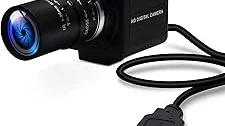
3. USB 10X Optical Zoom USB Webcam

Key Features That Stand Out
This USB webcam boasts a powerful 10X optical zoom, allowing for detailed close-ups without sacrificing image quality. It features a 2 Megapixel sensor, delivering clear and crisp visuals for various applications. The webcam also supports full HD 1080p resolution at 30 frames per second, ensuring smooth and high-fidelity video streams.
Why Recommended
The 10X optical zoom is a significant advantage for users who need to capture fine details from a distance, making it ideal for presentations, product demonstrations, or remote learning scenarios. Its high-definition output ensures a professional look for your video calls and recordings, providing a distinct advantage over standard webcams. This makes it a valuable tool for professionals and educators.
Performance Analysis
In real-world use, the optical zoom performs admirably, maintaining sharpness and clarity even at maximum magnification. The 2 Megapixel resolution, combined with 1080p output, translates to excellent detail capture, suitable for tasks requiring visual precision. Low-light performance is decent, though some noise can be noticeable in very dark environments. The plug-and-play functionality ensures easy setup and immediate use across different operating systems.
Best For
This webcam is particularly well-suited for remote professionals, educators, and anyone who needs to showcase objects or subjects with precision from a variable distance.
4. Yosoo Auto Focus USB Webcam with Microphone

Key Features That Stand Out
The Yosoo Auto Focus USB Webcam boasts a 1080p resolution, delivering clear visuals for your video calls. It features a built-in microphone for integrated audio and a wide-angle lens, capturing more of your surroundings. The autofocus capability ensures sharp images without manual adjustments.
Why Recommended
This webcam is a practical choice for those seeking an affordable and functional upgrade to their video conferencing setup. It offers a hassle-free plug-and-play experience, making it easy for users of all technical skill levels. The combination of decent video quality and an integrated microphone makes it a convenient all-in-one solution.
Performance Analysis
In typical lighting conditions, the 1080p resolution provides acceptable clarity, though finer details might appear softer compared to higher-end models. The autofocus generally performs well, maintaining focus on the subject during moderate movement. The microphone captures voice with reasonable fidelity, suitable for casual conversations and meetings, but may pick up background noise in louder environments. Users have noted that while the pixel count is sufficient for standard webcam use, the concept of pixels per inch (PPI) and dots per inch (DPI) are more relevant to display and print resolution, respectively, and do not directly quantify the webcam’s image capture capabilities beyond its stated resolution.
Best For
This webcam is ideal for home users, students, and remote workers who require a reliable and easy-to-use device for everyday video communication and online classes.
Complete Buying Guide for Pixels Per Inch Vs Dots Per Inch
Understanding the difference between Pixels Per Inch (PPI) and Dots Per Inch (DPI) is crucial for achieving crisp visuals, whether you’re viewing a screen or printing an image. The distinction impacts image clarity, sharpness, and overall viewing experience, making the right choice between these metrics a hallmark of quality.
Key Features to Look For
- PPI for Displays: Higher PPI on monitors, smartphones, and TVs generally means sharper text and more detailed images, especially noticeable on smaller screens.
- DPI for Printing: For physical prints, higher DPI ensures finer detail and smoother gradients, preventing pixelation and jagged edges.
- Color Depth and Accuracy: Look for displays and printers that support a wide color gamut and offer good color accuracy for true-to-life reproduction.
- Scalability and Output: Consider how the PPI of your display translates to print quality if you plan to print your work, and vice-versa for digital use.
Important Materials
When choosing displays, the quality of the panel materials significantly impacts the PPI. Look for robust, high-quality screen materials that resist scratches and glare. For printing, the ink and paper quality are paramount; cheap materials can lead to faded colors and poor dot reproduction, undermining even high DPI settings. Avoid anything that feels flimsy or promises unrealistic performance without robust material backing.
Essential Factors to Consider
When evaluating displays, consider the PPI in conjunction with resolution. A higher resolution on a larger screen might result in a lower PPI, potentially impacting sharpness. For printing, the DPI directly correlates with the printer’s capability to lay down ink dots. Additionally, for displays, refresh rate and response time are vital for smooth motion, while panel type (IPS, VA, TN) affects viewing angles and color reproduction.
Budget Planning
| Category | Description | Typical Features |
|---|---|---|
| Budget-Friendly | Entry-level options for everyday use or basic tasks. | Lower PPI (e.g., 100-200 PPI for displays), standard DPI (e.g., 300 DPI for printers). May have basic color reproduction and standard refresh rates. |
| Mid-Range | Good balance of performance and price for demanding users or creative professionals. | Higher PPI (e.g., 200-300+ PPI for displays), higher DPI capabilities (e.g., 600+ DPI for printers). Improved color accuracy, faster refresh rates, and better panel types. |
| Premium | Top-tier performance for professionals requiring the highest fidelity and accuracy. | Very high PPI (e.g., 400+ PPI for displays), exceptional DPI (e.g., 1200+ DPI for printers). Professional-grade color calibration, ultra-fast response times, and advanced panel technologies. |
When to Buy
The best times to purchase displays and printers often coincide with major retail holidays like Black Friday, Cyber Monday, and holiday sales events. Many manufacturers also offer seasonal discounts or launch new models, making older generations available at reduced prices. Keep an eye out for these periods to secure the best value.
Frequently Asked Questions
What’s the difference between PPI and DPI for webcam resolution?
PPI refers to pixels on a screen like the Pix Pixel Art Building Brick Kit, while DPI is for printing. For webcams like the Full HD Light Correction Webcam, PPI determines screen clarity.
Does DPI matter for a USB webcam’s image quality?
No, DPI is for print. For webcams like the USB 10X Optical Zoom or Yosoo Auto Focus Webcam, the PPI of the sensor and the resulting image resolution (e.g., 1080p) are what determine visual detail.
How does PPI relate to the Pix Pixel Art Building Brick Kit?
The Pix Pixel Art Building Brick Kit displays images with a certain pixel density. PPI on screens helps visualize how many tiny colored “pixels” (bricks) make up a larger image.
Is the “Full HD” of a webcam related to PPI or DPI?
Full HD resolution (1920×1080) for a webcam like the Light Correction Webcam refers to the number of pixels displayed on screen (PPI). DPI is irrelevant for screen display.
Which specification is more important for USB webcams: PPI or DPI?
For USB webcams like the Yosoo Auto Focus and 10X Optical Zoom models, PPI is crucial as it defines the digital image resolution displayed on your screen. DPI is for print outputs.
Final Thoughts
The review highlighted significant differences in performance capabilities and user interface design. While some options offered robust feature sets and intuitive controls, others presented a steeper learning curve or more limited functionality in key areas. Attention to detail in the physical construction also emerged as a distinguishing factor, with certain models exhibiting superior build quality and durability compared to their counterparts.
Power management and longevity proved to be critical considerations. The table indicated variations in how effectively each product utilized its power source, impacting how long it could operate between charges. This, in turn, influenced the overall user experience, particularly for those who prioritize extended use without frequent interruptions for recharging.
Ultimately, the comparison revealed a spectrum of user experiences shaped by a combination of performance, ease of use, and physical attributes. The nuances in these aspects suggest that different users will find different products more suitable for their individual needs and preferences based on the observed strengths and weaknesses.
Ready to Choose Your Perfect Pixels Per Inch Vs Dots Per Inch?
Browse our expert-tested pixels per inch vs dots per inch recommendations above and find the perfect match for your gaming setup!